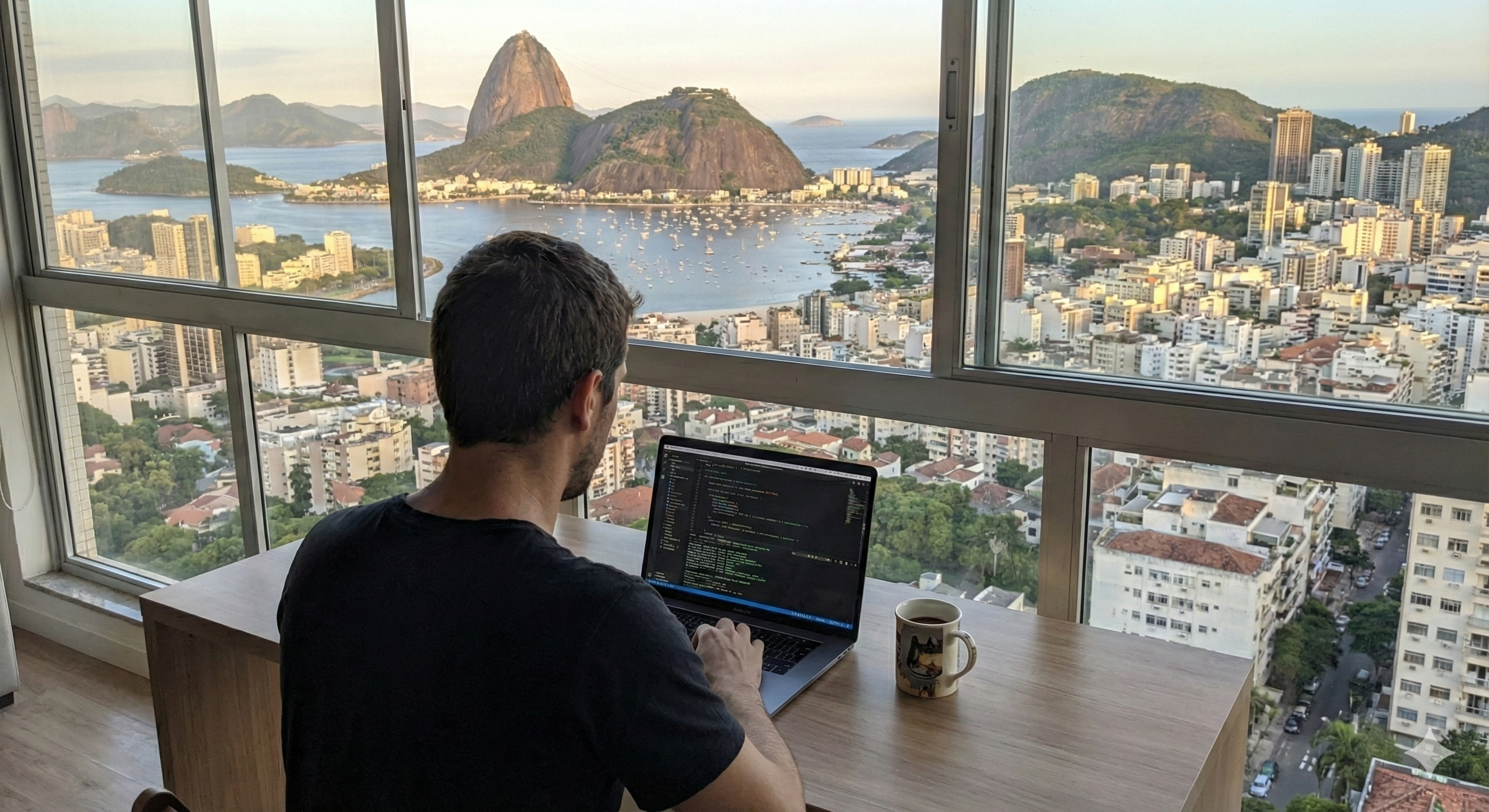
If you’re leading a product or engineering team in the US right now, you’ve probably felt it: hiring great developers is slow, expensive, and way more competitive than it should be.
That’s why more and more teams are quietly looking south.
Brazil isn’t just “an emerging market” anymore. It’s become one of the most interesting places in the world to find serious engineering and AI talent: people who’ve shipped real products, at real scale, under real constraints.
In this post, we’ll walk through why Brazil has become such a strong tech and AI hub, and what that actually means if you’re trying to build or extend a high-performing engineering team.
1. World‑Class Engineers (At Real Scale)
Let’s start with the basics: talent. Brazil produces a significant pipeline of technical talent every year. Depending on the source, you’ll see estimates of 100,000+ new STEM graduates annually from public and private universities. Schools like USP, UNICAMP, UFRJ, ITA, PUC and others consistently rank among the best in Latin America for engineering and computer science.
But volume is only part of the story. What tends to matter more to CTOs and product leaders is how these engineers work:
- Strong foundations in backend and infrastructure: Java, .NET, Node.js, Go, microservices, distributed systems.
- Solid mobile expertise: Android, iOS, React Native, Flutter (Brazil is a very mobile‑first country).
- Fast‑rising data & AI skills: Python, SQL, Spark, modern ML frameworks, ETL/data pipelines.
And because many of these teams grew up in environments with budget constraints, legacy systems, and less‑than‑perfect infrastructure, Brazilian engineers build a reputation for:
- Creative problem‑solving – finding pragmatic solutions when tools, docs, or resources aren’t ideal.
- Resilience and robustness – designing systems that keep working even when networks are flaky, or load is unpredictable.
- Full‑stack ownership – not being precious about “my layer”; they’ll jump where the work is to get a feature shipped.
If you’ve ever wished your team had a few more “give me the messy problem, I’ll figure it out” engineers, Brazil has a lot of those.
2. LATAM’s Most Battle‑Tested Startup Playground
You’re not just hiring from classrooms, you’re hiring from a startup pressure cooker.
Brazil has one of the largest and most active startup ecosystems in LATAM, with 16,000+ startups across fintech, logistics, e‑commerce, SaaS, healthtech, and more. The country has produced multiple unicorns and decacorns, including:
- Nubank (fintech)
- iFood (delivery)
- Wildlife Studios (gaming)
- 99 (mobility)
- Loft, QuintoAndar, Gympass, Creditas, and others
What that means for you:
- A huge number of engineers have actually lived through hypergrowth. They know what it feels like when user numbers, data volume, and incident count all go up at the same time.
- Many are used to shipping fast, testing in production, and iterating based on real user behavior, not just specs.
- Product, design, and engineering are often organized into squads or pods, so collaboration and product thinking are built into how they work.
So when you plug Brazilian talent into your environment, you’re often bringing in people who have:
- Built and maintained payment systems, marketplaces, and consumer apps with millions of active users.
- Dealt with scaling pains: latency, throughput, database growth, observability, and incident management.
- Worked in cross‑functional teams where product impact matters as much as lines of code.
For Product & AI teams, that “I’ve done this before” muscle is a big deal.
3. Engineers Fluent in the ‘Global Standard’

Another big question CTOs ask is: Will they work the way we work? In Brazil, the answer is usually yes, and not by accident.
Global tech companies have spent years building and growing their presence in the country. Names you already know and probably use:
- Amazon, Google, Microsoft, Meta
- Plus dozens of US and European scaleups across fintech, SaaS, logistics, devtools, and e‑commerce
This exposure means a large share of Brazilian engineers are already fluent in:
- Modern processes – agile, Scrum/Kanban, product discovery/delivery, OKRs, incident response, RFC culture.
- Global tooling – GitHub/GitLab, CI/CD, cloud platforms (AWS/GCP/Azure), observability stacks, experimentation platforms.
- Security and compliance expectations – especially in regulated sectors like fintech and payments.
- Cross‑cultural collaboration – working in English, syncing with US/European time zones, and juggling remote stakeholders.
So you’re not onboarding people into “how we do software in the US.” You’re connecting with devs who already live in that operating system.
4. Nearshore Time Zones That Actually Work
One of the biggest functional wins with Brazil is simple but powerful: time zone overlap.
Depending on location and time of year, Brazil shares several working hours with:
- EST (Eastern Time)
- CST (Central Time)
- PST (Pacific Time)
Practically, that means you can:
- Run real‑time standups where everyone’s awake and engaged.
- Jump on quick debugging or architecture calls when something looks off.
- Iterate faster on design reviews, QA, and product decisions because you’re not waiting 24 hours for a response.
If you’ve ever managed a team 10–12 hours away, you know how quickly things slow down: long email threads, misalignment, and meetings at terrible hours. With Brazil, you get the cost and talent advantages of going abroad without turning your roadmap into an async‑only exercise.
For fast‑moving Product & AI teams, real‑time collaboration is often the difference between “this works” and “this is painful.”
5. Products Used by Millions
Brazil is a huge digital market:
- 215M+ people
- 180M+ internet users
- Deep penetration of smartphones, instant payments (Pix), super‑apps, and e‑commerce
This has a very practical side effect: a lot of Brazilian engineers start their careers on products that serve hundreds of thousands or millions of users, not just a few enterprise logos.
They’re used to:
- Building for high traffic and spiky workloads (e.g., Black Friday, big sports events, salary days).
- Designing with latency, reliability, and failover in mind.
- Working through real constraints: uneven connectivity, a wide range of devices, complex payment flows, regional regulations.
So when you hire out of Brazil, you’re often getting people who already know how to:
- Think in terms of system reliability, not just feature completeness.
- Read metrics and logs and respond to real incidents.
- Run fast experiments without blowing up production.
If your roadmap includes scaling usage, shipping AI features into production, or hardening your platform, that background becomes a real multiplier.
6. Cost, Retention, and Fit
The headline story is talent quality and experience. But the quieter, operational advantages matter too, especially if you’re a CTO watching burn and runway.
A few patterns we see over and over:
- More sustainable compensation levels – You’re not paying Silicon Valley prices.
- Better retention than overheated US hubs – The local market is competitive, but not at the same constant poaching level as major US tech cities. Teams often report longer average tenure.
- Strong cultural alignment – Brazilian work culture tends to value collaboration, relationship‑building, and ownership, which blends well with modern product and startup cultures in the US.
Put simply: you’re not just buying hours of coding. You’re making a bet on a region where quality, cost, time zone, and culture all line up in a way that’s very hard to find elsewhere.
7. So What Does This Mean for You as a CTO or Product & AI Leader?
If you’re:
- Struggling to hire or retain enough senior engineers in the US
- Trying to accelerate your roadmap without exploding your burn
- Looking for talent that can handle AI, data, backend, and product thinking
…then Brazil should absolutely be on your shortlist.
You have options, of course: Eastern Europe, Asia, and fully remote within the US. But Brazil gives you a very specific mix:
- World‑class engineers who’ve built real products at scale
- A startup and Big Tech ecosystem that has already done a lot of the training for you
- Nearshore collaboration that doesn’t slow your team down
- A massive, demanding home market that forces engineers to level up
For many US teams, the real unlock is not “outsourcing” but treating Brazil as a genuine extension of their core product and AI organization.
Ready to Tap Into Brazil’s Engineering Power?

If this resonates, you don’t have to figure it out alone.
We help US companies build high‑performing LATAM engineering teams with a focus on:
- Engineers who’ve shipped at scale
- Strong communication and cultural fit
- Clean integration into your existing stack, rituals, and roadmap
If you’re exploring Brazil for the first time or you’ve tried hiring there and want a more structured approach, reach out here. We can walk you through what a LATAM‑powered Product & AI team could look like for your company and help you get your first squad live, fast.
.webp)
%20(1317%20x%20739%20px)%20(7)-4.png)
%20(12).png)